Roof Leak Only During Heavy Georgia Downpours? Where It's Sneaking In
Quick Answer: A roof that stays dry in a light drizzle but leaks during a hard, wind-driven Georgia storm almost never has a hole punched through it. Instead, water is getting pushed sideways or backward into places built to handle a gentle, gravity-fed drip, not a sideways blast of wind and volume. The usual suspects are wind-driven rain forcing water uphill under shingle laps, valleys running fuller than they're built for, gutters overflowing back under the roof edge, and flashing around chimneys, walls, and skylights that only fails once it's under sustained pressure. Because the point of entry only reveals itself under specific conditions, tracking exactly when the leak shows up is the fastest way to find it.
You've mopped up the same spot in the ceiling twice now, both times during a downpour that rattled the windows, and both times the stain dried out and you told yourself it was a one-off. Then a gentle rain comes through a week later and nothing happens. No drip, no stain, no problem. It's tempting to write it off, but a roof that only leaks under specific conditions is telling you something precise about where the water is getting in, and that pattern is worth paying attention to before the next big storm turns a small stain into a soaked ceiling.
A shingle roof is not one continuous waterproof membrane. It's an overlapping system, each course of shingles handing water off to the one below it, relying on gravity and a controlled downhill path to keep everything dry. That design handles a steady, straight-down rain without any trouble. What it isn't built for is water moving sideways, water piling up faster than it can drain, or water being forced backward against the direction it's supposed to flow. Heavy, wind-driven Georgia storms do all three at once, which is exactly why a roof can sail through a calm rain and still leak the moment the wind picks up.
Why Volume and Wind Change Everything
In a light, straight-down rain, water lands on a shingle, runs down its face, and drops onto the shingle below it without ever reaching the seams or the layers underneath. The whole system depends on that orderly, downhill hand-off.
A heavy downpour breaks that pattern in two ways. First, sheer volume overwhelms drainage paths that were sized for an ordinary rain, so water backs up in valleys, at roof-to-wall joints, and along the eaves faster than it can run off. Second, wind adds a sideways force that water never experiences in calm conditions. Instead of falling straight down and sliding off, it gets pushed sideways across the shingle surface and, in strong gusts, driven upward under the bottom edge of a shingle lap. Once water is moving against the grain of the roof's design instead of with it, it finds gaps that a vertical rain would never reach.
This is also why the direction of the wind during a storm tends to matter. A leak that only shows up when a storm rolls in from one particular direction, say, off a stretch of open yard versus wind that's blocked by trees or a neighboring roofline, often points to wind-driven water finding a specific weak spot on that side of the house rather than a general roof problem.
The Places Water Actually Gets In
Most roofs don't leak out in the open field of shingles. They leak at the transitions and details, the spots where one roofing material meets another or where the roof meets something that punches through it. Those junctions handle a light rain fine. It's sustained heavy volume and wind pressure that expose whatever margin they didn't have.
Valleys That Can't Keep Up
A roof valley is where two slopes meet, funneling combined runoff into one channel—always carrying more water than any other section. A light rain is a manageable trickle. A hard downpour asks that valley to move several times the volume, forcing water sideways under shingles.
Flashing Around Chimneys, Walls, and Skylights
Step flashing and counter-flashing shed normal rain running down the roof, but they're not built for standing water or wind-driven spray hitting sideways. A small gap or aging sealant might do nothing in light rain. Add wind and volume, and it becomes an entry point.
Gutters That Overflow Back Under the Roof
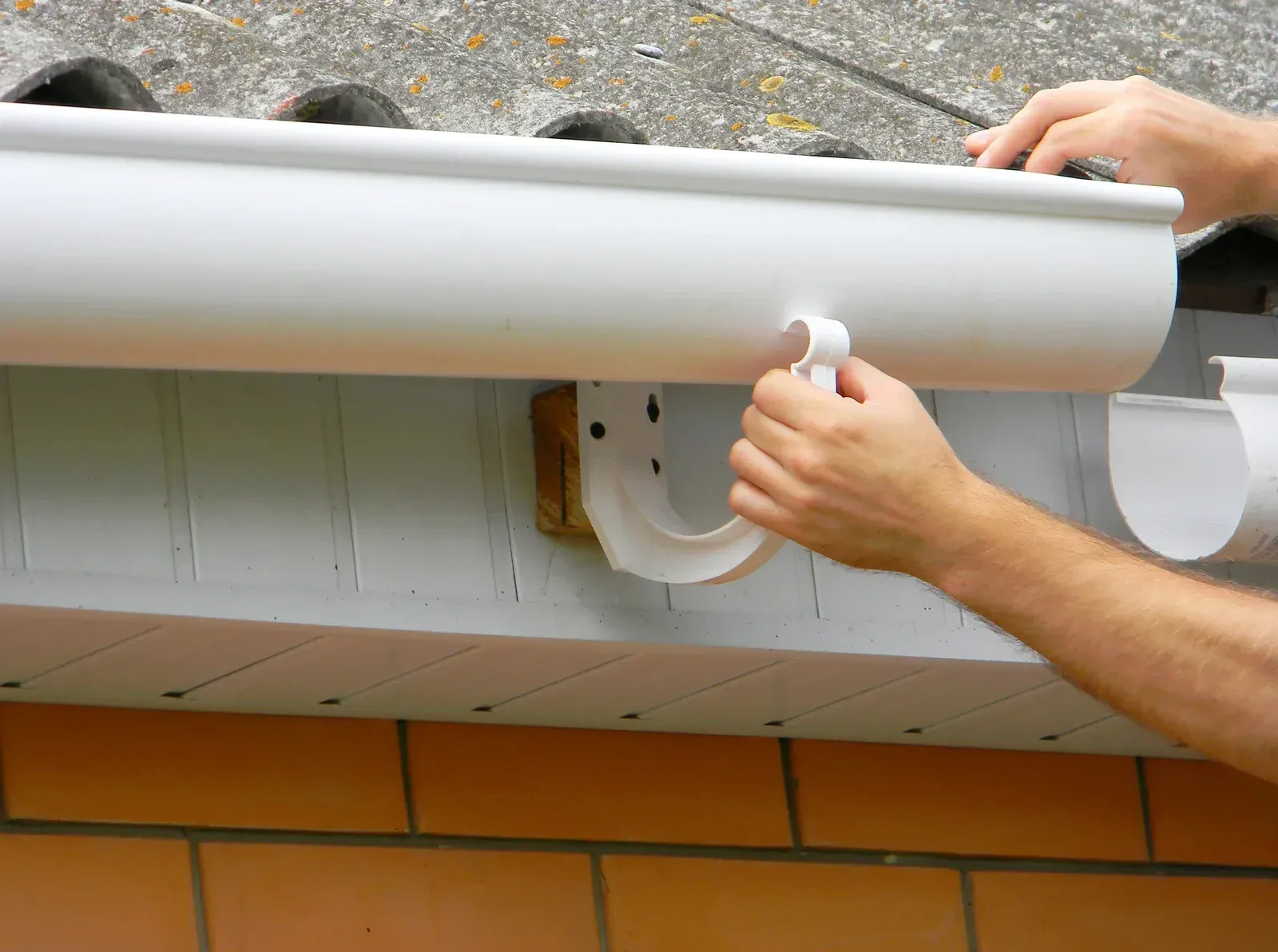
Clogged or undersized gutters work fine in light rain—there's not enough water to overwhelm them. A heavy downpour is different: water sheets over the edge and backs up behind the fascia, wicking under the drip edge and onto the deck, leaking along the eave instead.
Vent Pipe Boots and Skylight Seals
Vent boots and skylight seals shed normal rain running past them. Once aged and cracked, light rain beads and runs off before finding the crack. Sustained heavy rain gives water time to sit and work through, especially with wind driving it against pipe or curb.
Tip: The next time you get a leak during a storm, jot down the exact conditions: which way the wind was blowing, how hard it was raining, and roughly how long it took for the drip to start. That pattern is more useful to a roofer than the stain itself, since it points toward a valley, a flashing detail, or a gutter overflow before anyone even gets on the roof.
Why a "Only in Heavy Rain" Leak Deserves Attention Now
It's easy to let an intermittent leak slide because it isn't a constant, obvious problem. But an entry point that only shows itself under heavy volume and wind is still an open path into the roof deck, and every storm that reaches that threshold sends more water through it. The wood underneath doesn't dry out between storms the way the visible ceiling stain does. Moisture that reaches the decking or the framing can sit there quietly, and repeated wetting is what eventually leads to rot, mold, and sagging that costs far more to address than the original entry point would have.
There's also a practical reason to treat this as more urgent than a garden-variety maintenance item: an intermittent leak is a lot trickier to pin down than one that shows up every time it rains. Waiting for "the next big one" to catch it in the act just means more water gets into the structure in the meantime. A targeted inspection can find the entry point without making you sit through another storm first.
How a Roofer Tracks Down an Intermittent Leak
Finding a leak that only shows up during heavy, wind-driven rain takes more digging than spotting an obvious hole, mostly because the roof looks fine on any calm day you'd actually want to get up there.
Most roofers start inside, at the stain, and work backward from it. That ceiling spot rarely sits directly under the actual entry point. Water travels. It runs along the underside of the decking or slides down a rafter before it finally drops, so tracing the path uphill from the stain matters more than staring straight up at it. From there, the inspection covers every transition along that path at once, not just the shingles: valleys, step flashing, counter-flashing, vent boots, skylight curbs, the gutter line. The leak is almost always sitting at one of those junctions.
What you noticed matters here too. Wind direction, how hard it was raining, and roughly how long the storm ran before the drip started all help narrow down the likely culprit, especially if the leak only shows up with wind coming from one side of the house. And when it's safe to do so, a roofer can run water at a suspected valley or flashing detail to reproduce the leak on purpose, which confirms the exact spot instead of leaving it to guesswork based on a ceiling stain alone.
Warning: Resist the urge to seal a suspected leak point yourself with caulk or roofing cement from the ground or a ladder. A dab of sealant over the wrong spot can trap moisture that's already gotten in, and it can mask the real entry point long enough for a roofer to miss it later, letting the underlying issue keep spreading between storms.
Reading the Pattern Before the Next Storm
An intermittent leak that only shows up in heavy, wind-driven rain isn't a fluke, and it isn't something a roof simply grows out of. It's a specific weak point being exposed by conditions a light rain never creates: wind pushing water where gravity alone wouldn't take it, a valley or gutter asked to move more water than it's built for, or flashing that's holding on by a margin thinner than you'd like. The pattern you've noticed, which storms trigger it and which don't, is exactly the information that turns a frustrating mystery into a fixable problem.
Frequently Asked Questions
Why doesn't my roof leak in a light rain if there's clearly a problem somewhere?
The entry point only opens under conditions light rain doesn't create. Wind-driven water, valley overflow, and gutter backup all depend on volume and pressure a gentle rain won't generate.
Does the direction of the wind really matter that much?
Yes. Wind-driven rain hits one side of a roof harder than another, so a leak tied to wind from a particular direction often points to a specific flashing detail or valley there.
Could my gutters really be causing a leak that looks like it's coming from the roof?
Absolutely. An overflowing gutter can back up behind the fascia and wick under the roof edge, producing a leak along the eave tied to the gutter line, not the shingles above.
Is it worth getting this looked at if it only happens a few times a year?
Yes. Water reaching the deck doesn't care how often it happens. Repeated wetting during heavy storms starts rot over time, and the leak is easier to trace before it worsens.
What should I do between now and the next heavy storm?
Note which way the wind was blowing and how long it took the drip to start, and stay off the roof yourself. Pair that with a professional look at the suspected path.
Tracing the Leak Back to Its Source
An intermittent leak that only shows up during hard, wind-driven storms isn't a fluke, and it isn't something a roof simply grows out of. It's a specific weak point being exposed by conditions a light rain never creates, wind pushing water where gravity alone wouldn't take it, a valley or gutter asked to move more than it's built for, or flashing holding on by a thinner margin than you'd like. The pattern you've noticed is exactly the information that turns a frustrating mystery into a fixable problem.
With 15+ years of experience serving Atlanta, Macon, and Gainesville, Georgia, Absolute Roofing and Gutters
traces leaks like this back to their source, checking valleys, flashing, vent boots, and gutter lines along the path from a ceiling stain to the actual entry point. That kind of tracing is what catches a weak spot before another heavy downpour sends more water into the deck below.