Ceiling Stain After a Storm but No Active Drip? What to Check First
Quick Answer: A ceiling stain that appears after a storm with no active drip usually means water got in, soaked the drywall or insulation, and then stopped flowing when the rain did. Press the stain gently, look at its edges, and check whether it grows after the next rain. Then look at the likely entry points: flashing, roof penetrations, lifted shingles, and gutters. A stain that is soft, spreading, or tied to storms deserves a professional roof inspection even when nothing is dripping.
You wake up the morning after a loud Georgia thunderstorm, walk into the hallway, and notice a tan patch on the ceiling that was not there yesterday. You look up, wait a moment, and nothing drips. The rain has moved on, the sun is out, and the whole thing looks almost harmless. Maybe it is old. Maybe the paint is just discolored. Maybe it will dry out and you can forget about it.
That hopeful thought is understandable, but a stain with no drip is not the same as no problem. Water has to come from somewhere to leave a mark, and the fact that it stopped moving does not tell you whether the source is closed. This guide walks through what to check first, in a sensible order, so you can work out what you are looking at before the next storm answers the question for you.
Why a Stain Can Appear Without a Drip
Most people picture a roof leak as a steady drip into a bucket. In real homes, leaks are usually quieter than that. During a storm, water slips past a weak spot in the roof covering and lands on the roof deck, the insulation, or the top of the drywall. Insulation and drywall are both good at absorbing moisture, so they soak it up like a sponge instead of letting it fall into the room.
Once the rain stops, the supply of new water stops too. The drywall holds what it absorbed, a brown or tan stain spreads outward as the moisture wicks through the paper, and the ceiling looks wet or discolored without ever dripping. That is why a storm can leave a mark that seems to have appeared overnight.
Georgia weather makes this pattern common. Summer storms arrive with heavy, wind driven rain that pushes water sideways under shingles and around flashing. High humidity then keeps the damp material from drying quickly, so a stain can stay visible for days. A weak spot may only open up under a hard, angled rain, which is why the ceiling looked fine during gentle showers all month.
Fresh Moisture or Old Damage? A Quick Way to Tell
Before you decide how worried to be, work out whether the stain is new, old, or something in between. A few simple checks help.
Start With Touch
Press a clean, dry hand against the stained area. If the drywall feels cool, damp, or slightly soft, moisture is still in the material. If it feels dry and firm, the water may have dried out already, though that does not mean it was a one time event.
Look At The Edges
A stain with a darker ring around the outside, sometimes with several rings like the lines on a tree, usually means the area has gotten wet and dried more than once. Each storm adds another ring. A stain with a soft, blurry edge and a uniform color is more likely a single recent wetting.
Check The Paint And Surface
Bubbling paint, peeling, or a surface that looks swollen suggests moisture is trapped behind it. A faint musty smell near the stain points the same direction.
Take A Photo And Mark The Edge
Use a pencil to trace lightly around the border of the stain, and write the date beside it. After the next rain or after a day of high humidity, compare. A stain that grows past your pencil line is active. A stain that holds still may be old or dried, but it is still worth explaining.
Tip: Take a photo of the stain in the same spot with the same light each day for a week. Small changes are easy to miss in person but obvious when you compare pictures side by side.
Look at Where the Stain Sits
The location of a stain tells you a lot, because water rarely enters the house directly above the spot where you see it. It runs along rafters, roof decking, and pipes before it finds a place to soak into the ceiling. Still, the pattern gives clues.
A stain near an exterior wall often points to the roof edge, where gutters, fascia, and the first row of shingles meet. If gutters overflow or back up, water can be pushed under the edge of the roof and into the top of the wall.
A stain near a chimney, vent pipe, skylight, or exhaust fan points toward flashing. Those are the places where the roof has been cut open and then sealed again, and the seals are the first thing to wear out.
A stain in the middle of a room, far from any wall, may come from a spot higher on the roof where water entered and then traveled down along the framing. It can also come from a different source entirely, which is the subject of the next section.
A stain beneath a bathroom, laundry room, or kitchen deserves a separate thought. Plumbing and fixtures can leave marks that look just like a roof leak. If the stain lines up with a room that has water lines above it, run each fixture separately and watch whether the stain changes.
The Common Entry Points After a Georgia Storm
Once you have a rough idea of where the water might have come from, these are the usual suspects on a roof.
Flashing At Penetrations And Walls
Flashing around chimneys, vents, and wall joints can loosen or lift over time, allowing stormwater to enter through gaps.
Lifted, Cracked, Or Missing Shingles
Strong winds can lift shingle edges, break seals, or crack tabs, letting rain penetrate beneath shingles during storms.
Exposed Or Backed-Out Nails
Raised nail heads create openings where water can travel along the nail shank and seep into the roof deck.
Pipe Boots And Vent Seals
Rubber collars around plumbing vents can dry out and crack in the sun, creating small openings that leak during heavy rain.
Gutters And Roof Edges
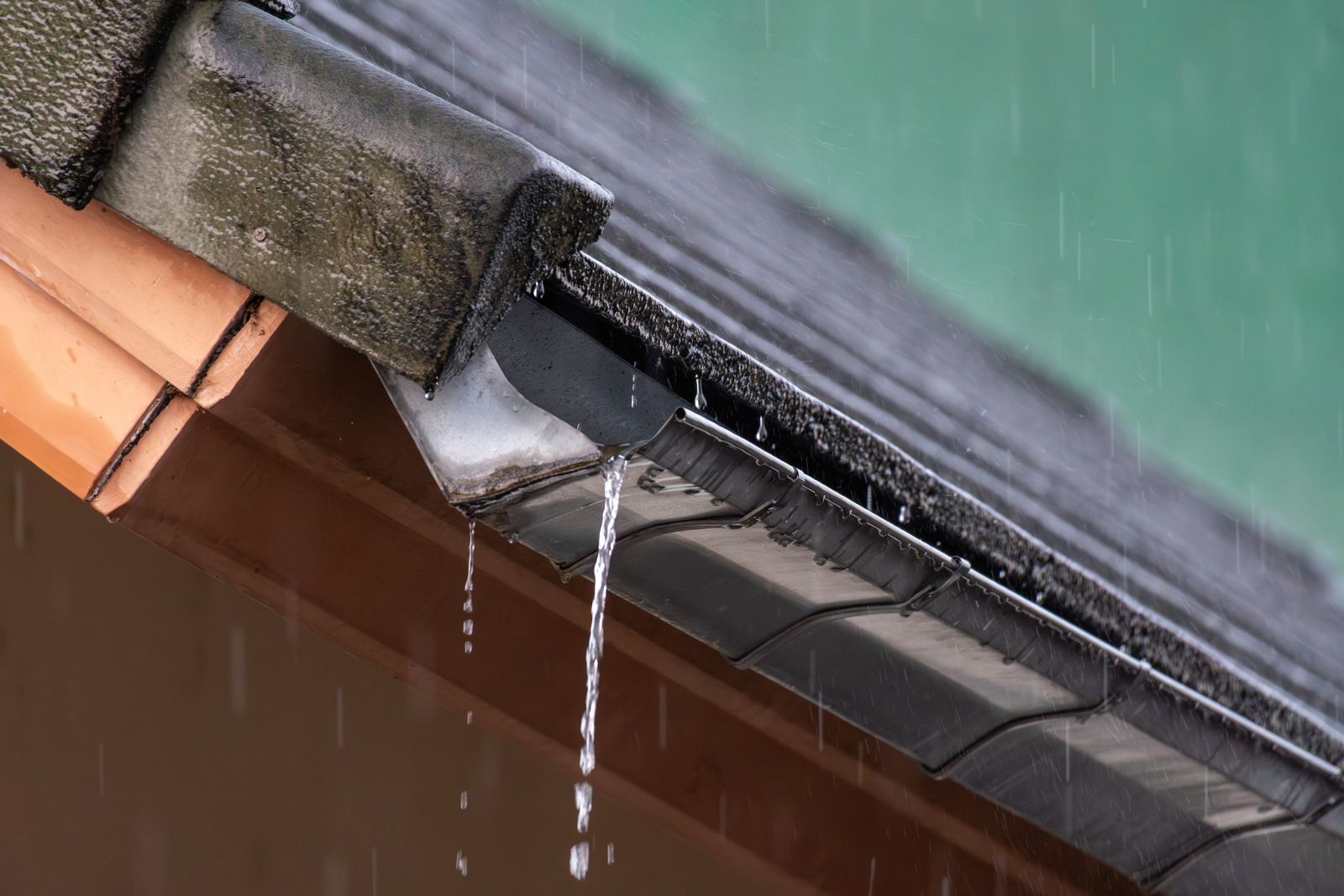
Clogged gutters trap water, causing it to back up beneath the first shingle course and soak the roof deck's edges.
Valleys And Debris
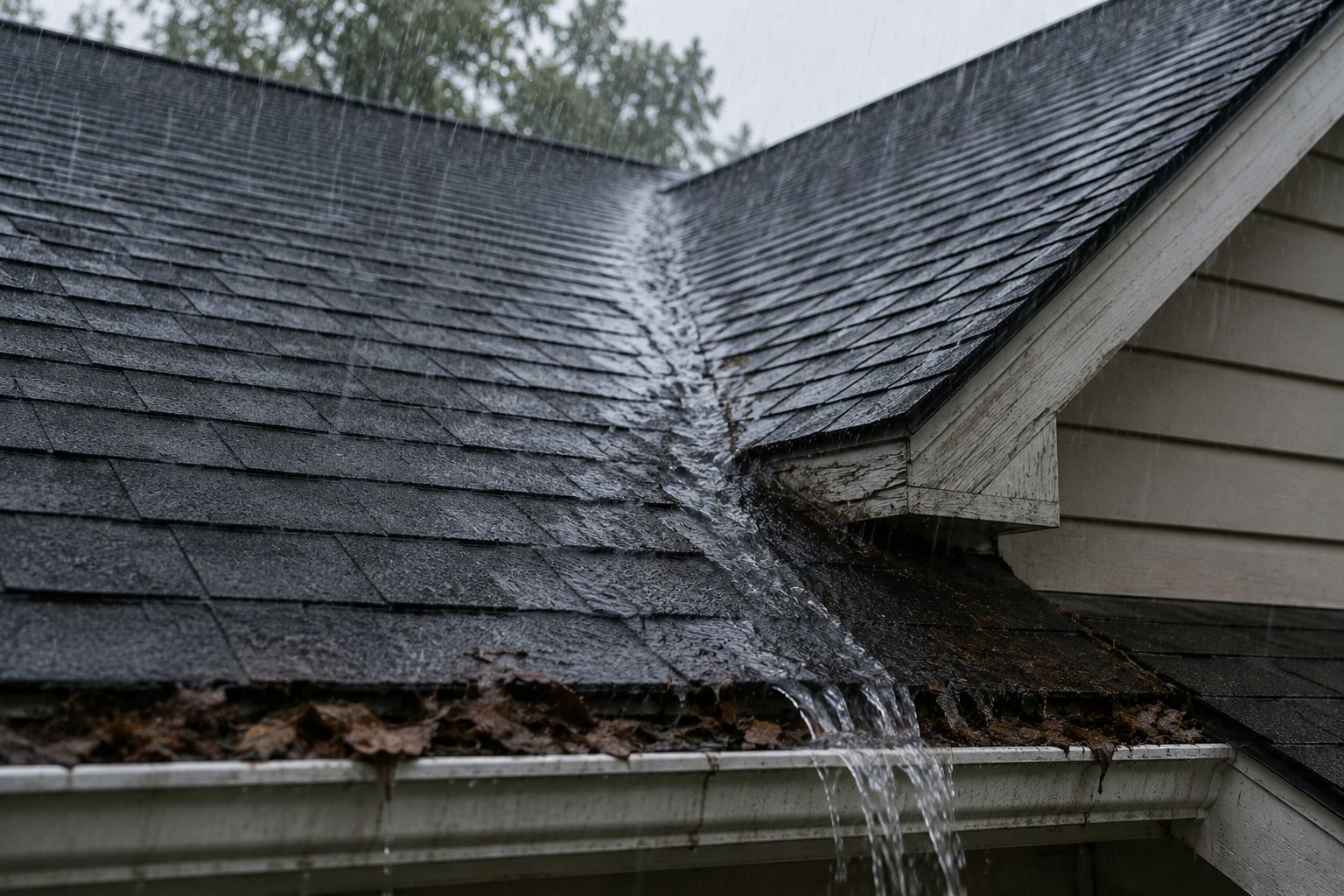
Roof valleys channel heavy water flow. Accumulated leaves and debris can redirect water beneath shingles, increasing leak risks.
Not Every Stain Is a Roof Problem
Honest troubleshooting means ruling out other causes before blaming the roof. Several things can leave a ceiling stain that has nothing to do with the last storm.
Air conditioning is a big one in Georgia. When humid air hits a cold duct or a drain pan, condensation forms. A clogged condensate line or a damaged pan can overflow into the ceiling below, and a stain near a register or an air handler often traces back to this. The timing might simply overlap with the storm because the weather was humid.
Attic condensation can also mimic a leak. If warm, moist air reaches the cool underside of the roof deck, it condenses and drips onto the insulation. This shows up more in winter, but poor ventilation in a humid climate can create it at other times too.
Plumbing leaks and bathroom exhaust fans that vent into the attic instead of outside can add moisture as well. If the stain does not seem to follow rainfall, or it appears after a stretch of dry weather, look at these sources before assuming the roof failed.
The best clue is the pattern. A stain that appears or grows only after heavy, wind driven rain points to the roof or exterior. A stain that appears on dry days points to plumbing, air conditioning, or condensation.
Warning: If the ceiling is sagging, bulging, or feels heavy, stay out from under it and keep people and pets away. Wet drywall can give way with little warning. If water is near a light fixture, fan, or outlet, turn off power to that circuit from the breaker panel if you can reach it safely, and have a professional look before you use it again.
What You Can Safely Check Yourself
You do not need to climb onto the roof to gather useful information, and you should not. Wet, hot, or damaged roofing is dangerous, and a fall is a much bigger problem than a stain. Stay on the ground and inside the house.
From the ground, walk around the house with binoculars if you have them. Look for shingles that are missing, lifted, or out of line. Look at the flashing around the chimney and vents for gaps or loose edges. Check the gutters for sagging, overflow marks, or debris, and look for fallen branches or anything that might have struck the roof.
Inside, check the ceiling under the stain and the rooms around it. Look for other faint stains, damp spots on walls, or paint that has begun to bubble. Smell the area for mustiness.
If the attic is accessible and you can reach it safely, take a flashlight and look from the hatch without stepping on the insulation or the ceiling below. You are looking for damp insulation, dark water marks on the wood, or wet decking. Do not crawl across the joists in the dark, and stay away from any wiring.
Why You Should Not Wait for a Drip
A dry looking stain can be tempting to ignore, and it is easy to see why. But there are practical reasons not to let it sit.
First, moisture in drywall and insulation does not disappear quickly in humid weather. Materials that stay damp for more than a day or two can begin to grow mold, and the musty smell is often the first sign. Drying things out early is far simpler than dealing with growth later.
Second, the source is still there. If a flashing seal or shingle failed, the next storm will send water through the same path, and each wetting makes the damage larger. Roof decking that stays damp can soften over time, and what began as a small repair can turn into a bigger one.
Third, the ceiling hides the evidence. By the time you see a drip, water may have already soaked the insulation, run along the framing, and spread to other places you cannot see. The stain is often the only warning you get.
What Not to Do
Do not paint over the stain right away. Primer and paint will hide the color, but they trap moisture and make it harder to notice if the problem returns. Wait until the source is found and fixed and the ceiling is fully dry.
Do not poke a hole in the ceiling unless it is bulging with water and a professional has advised you to relieve it. A controlled hole can sometimes prevent a collapse, but doing it blindly can spread the mess.
Do not assume that one dry day means the leak is solved. If a storm opened a gap, the next heavy rain can open it again.
What a Professional Inspection Looks For
When a roofer looks at a stain like this, the goal is to follow the water back to its entry point. That usually means checking the roof surface for lifted or damaged shingles, examining flashing and sealants at every penetration, and looking at the gutters and roof edges. It also means looking in the attic at the underside of the deck, tracing stains upward along the rafters, and noting whether the insulation is damp.
A good inspection explains what the evidence says. Some stains turn out to be old and already dry, and the honest answer is that the roof is fine and the ceiling just needs cosmetic work. Others lead to a small repair, such as resealing a vent boot, replacing a few shingles, or correcting flashing. And sometimes the stain is the first visible sign of a roof that has aged beyond spot fixes. The point of the visit is to know which one you have before another storm decides for you.
A Simple Plan for This Week
If you are looking at a fresh stain right now, here is a calm way to handle it.
First, mark the edge of the stain and photograph it. Second, press the area to see whether it is damp or soft. Third, walk the exterior and look for obvious damage from the ground. Fourth, check the gutters for clogs and overflow. Fifth, rule out air conditioning and plumbing if the pattern does not match the storm. Finally, if the stain is damp, growing, or tied to the weather, schedule a roof inspection and avoid cosmetic repairs until the cause is known.
Taking those steps takes less than an hour, and it gives a roofer much better information to work with. It also keeps you from relying on guesses.
Frequently Asked Questions
Why do I have a ceiling stain but no drip?
Water likely entered during the storm and was absorbed by the insulation and drywall instead of falling through. When the rain stopped, the dripping stopped, but the moisture stayed in the material and left a stain.
Can a ceiling stain be old and dry?
Yes. A dry, firm stain with multiple rings often means repeated wetting in the past. Even so, it is worth confirming that the source has been fixed, because an old leak that was never repaired can return with the next hard storm.
Should I paint over the stain?
Not yet. Painting over it hides the evidence and can trap moisture. Wait until the cause is found, the leak is repaired, and the ceiling has dried completely. Use a stain blocking primer at that point.
Can air conditioning cause a stain that looks like a roof leak?
Yes. A clogged condensate line, a damaged drain pan, or condensation on cold ducts can all leave a stain. If the stain appears without heavy rain, or sits near a vent or air handler, the air conditioning system is a good place to look.
How long can a damp ceiling sit before mold becomes a concern?
Damp materials left wet for more than a day or two can begin to grow mold, especially in humid weather. If the area smells musty or stays damp, address the moisture promptly instead of waiting.
Is a ceiling stain after a storm always a sign I need a new roof?
No. Many stains trace back to a small, fixable problem such as loose flashing, a cracked vent boot, or a few damaged shingles. A professional inspection can tell you whether a targeted repair will hold or whether the roof is nearing the end of its life.
Closing the Gap Before the Next Storm
A ceiling stain with no drip means water found a way in, soaked the drywall or insulation, and stopped when the rain did. Marking the edge, pressing the area, and checking the flashing, shingles, and gutters from the ground tell you far more than guessing. Ruling out air conditioning and plumbing keeps the search honest. Once the source is found and sealed, the ceiling can dry fully and be repaired for good.
Absolute Roofing and Gutters
has served Atlanta, GA for more than 15
years, and its roofers know how wind driven Georgia storms slip past flashing, vent boots, and lifted shingles. Each visit follows the stain back to its entry point and ends with a plain answer about whether a small repair will hold. Homeowners come away with a dry ceiling, a roof they can trust through the next downpour, and no lingering guesswork.